Courses

Dancefloor Utopias

A dancefloor is a temporary place. It exists for as long as people gather, through the sounds they share and the energy between them, and when the music stops it disappears. What stays is the memory of what was possible there. Across history, dancefloors have been where communities under pressure gather to celebrate, resist, experiment and imagine other ways of being together, and they can be anywhere: a club, a street, a bedroom, a rooftop, a protest, a room online. Any place people come together through sound. Dancefloor Utopias is a four-week Lab that asks why dancefloors matter, what dancefloors already exist where you live, and what kind you could bring into being. You'll answer by making something. Over four weekly sessions led by NINA NINA and Joy Moughanni, you'll explore sampling, field recording, sound design, rhythm and arrangement, and use them to build one original piece of music or sound work: your own dancefloor utopia, a sonic proposition for a temporary space of joy, pleasure, freedom or connection. The Lab ends with a collective listening, where the cohort hears the dancefloors imagined by people in very different places. There's no house style. Bring the references, tools and sonic language you already have; what matters is the question you're answering with them. Open to musicians, producers, DJs, sound artists, activists and curious music-makers, and especially those thinking about music and dancefloors in politically tense or difficult contexts.

Dates

Sessions

4 sessions

Duration

90 mins each

Level

All levels

Language

English

See more info below
NINA NINA
NINA NINA

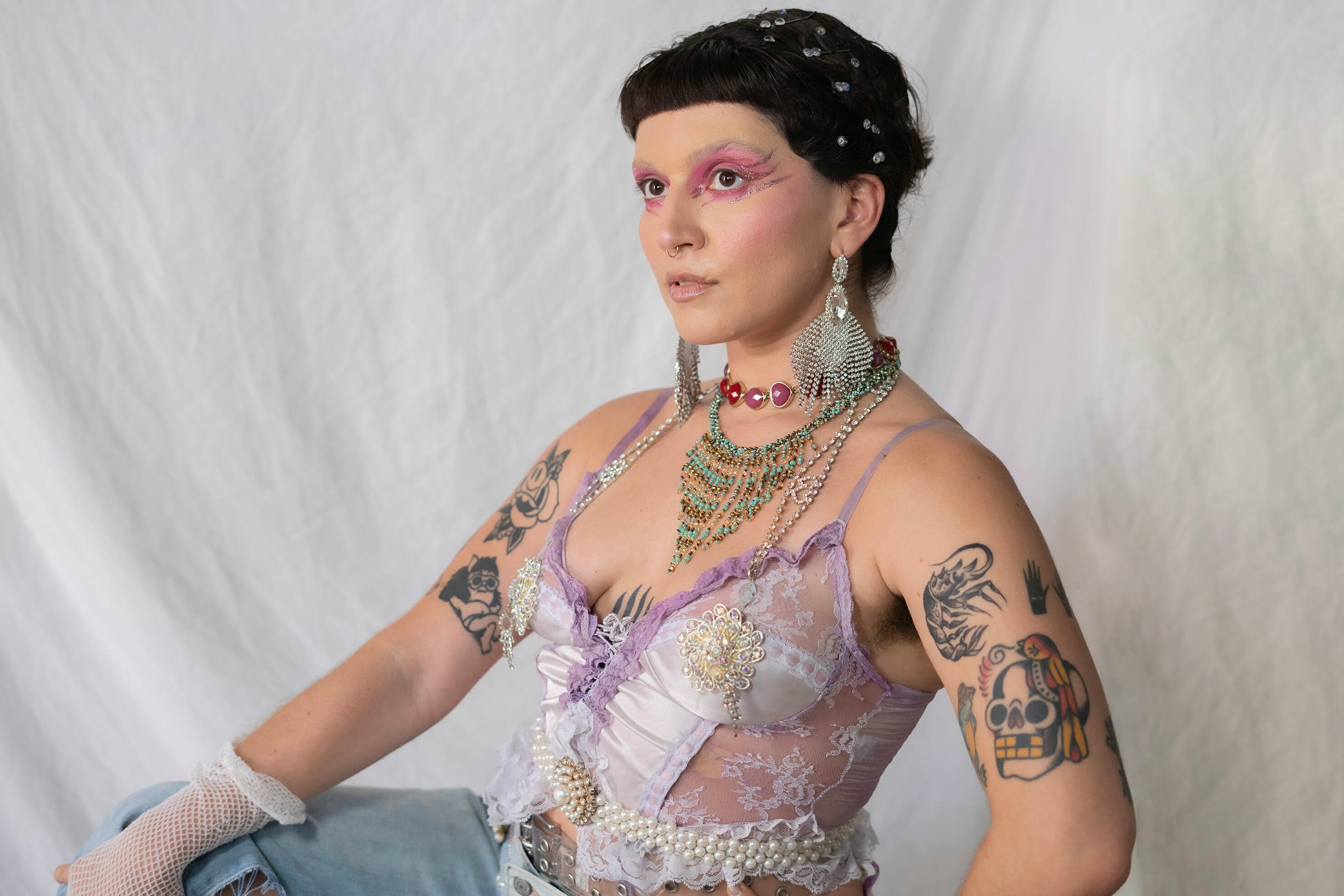
Daniela Ordóñez Guerrero, aka NINA NINA, is a multidisciplinary artist with musical training and origins in hip-hop and house music. Their music travels through the Latin rhythms of her native Veracruz coast and the world, incorporating the fabulousness of vogue and the odysseys of electronic leftfield. From live concerts to playful and daring DJ sets, they propose eclectic journeys for audiences who love to party. Club queen of the queer underground, with a national and international presence, the language of NINA NINA is translated into synthesizers, mixers and rhythm machines. NINA NINA recently toured in Colombia, Uruguay and Argentina, where they are recognized in the LGBTQIA+ circles and underground circuits. They are also part of LAS HIJAS DEL RAP, an all female/non binary hip hop collective that re-appropriates tools of urban culture to strengthen joyful, pleasurable, and audacious feminist narratives in Latin America.

View Full Profile
Joy Moughanni
Joy Moughanni

Joy Moughanni is a Beirut-based producer, engineer, and songwriter, as well as a partner at Beirut's Tunefork Studios. Transitioning to his solo career, he became a sought-after production collaborator in Beirut’s alternative scene, producing several albums for regional artists, exploring genres like Punk, Noise, Hip Hop, Electronic and Pop. Joy’s personal work explores sound in relational contexts, drawing from archives, his architectural studies and spatial sonic installations and collages. Recently, he has been sonically exploring themes of personal and political manipulation through his debut solo noise and ambient album “A Separation From Habit” Voted #48 on The Quietus 2025 Album of the year. The album is an introspective exploration of cyclical trauma that transcends the narrative of post-war identity. This collection of electronic performances and sonic collages draws from archival recordings made on tape by the late Georges Tarazi between 1975 and 1985. Through these fragments Moughanni confronts themes of occupation and the ongoing crises that have shaped the Lebanese experience since the first Israeli invasion in 1978, carrying through to the contemporary realities of October 2024, during which the album was created. Joy continues to build solidarity within Lebanon’s small but vibrant artistic community.

View Full Profile
Instructor Statement

We come to the dancefloor from different places, and we don't agree about everything that happens there. One of us hears utopia in it; the other hears noise, conflict and the friction that makes a space real. We've come to think that both are true, and that a dancefloor is worth taking seriously precisely because it holds both. It is not an escape from the world. It is a rehearsal for a different one. We've spent years watching dancefloors do work that institutions couldn't: making room for bodies and communities that had none, holding grief and joy in the same hour, letting people practise a freedom they weren't yet allowed. We've also seen how fragile they are, how quickly a room can be closed, policed, priced out or simply forgotten. That fragility is part of the point. A dancefloor exists for a moment and then it's gone, and what it leaves behind is the knowledge that the moment was possible. This Lab is our invitation to make that knowledge into sound. We're not asking anyone to produce a club track, or to work in our genres, or to share our politics. We're asking each participant to listen to the place they live, to notice where people already come together through sound and where they can't, and to build a small, honest proposition for a dancefloor that doesn't exist yet. Then we listen to them all together, from across the world, and for an hour we have one.

Course Outline
#
Sessions / Topics
Date
Time
1

DANCEFLOOR TERRITORIES: Reflection, context & sound gathering

90 mins

2

FUTURE ARCHIVES: Reflection + production + a special guest perspective

90 mins

3

BUILDING UTOPIA: Reflection + production + development

90 mins

4

QUANTUM LISTENING: Final production + collective listening experience

90 mins

FAQs

Do I need to make dance music? No. The dancefloor is the idea the Lab thinks with, not a genre requirement. Your piece can be a beat, a soundscape, a song, a noise composition, a field recording with voice, whatever your utopia sounds like. I've never used a DAW. Can I still join? Yes. Some familiarity with a DAW like Ableton, GarageBand, Logic or a free tool such as Reaper or Audacity will help you move faster, but the leads will support beginners during the Lab, and you can work with any sound-recording device and simple editing software. What equipment do I need? A computer or other device you can make and record sound on, headphones, and basic audio software. Beyond that, use what you have: instruments, hardware, a phone for field recording, samples, your voice. How much time is it? Four weekly sessions of about 90 minutes, plus time between sessions to record, gather and work on your piece. Expect one to three hours a week outside the sessions, more if you want. What will I have at the end? One finished original piece of music or sound work, and the experience of hearing it alongside the cohort's in a final collective listening session. Will the finished works be shared publicly? Only if you want them to be. The final listening is for the cohort. Any wider sharing, on the Commons listening room or elsewhere, is by each participant's choice. What if my dancefloor is somewhere it isn't safe to talk about? You never have to name your place, your scene or your community. Field recordings can be abstracted, locations withheld, and the leads have experience working with artists in contexts where these spaces are contested. Is the Lab in English? Sessions are held in English, with a mixed international cohort where many people are working in a second language. The leads will speak plainly and check understanding, and the making itself doesn't depend on language. What happens if I miss a session? Sessions are recorded on Zoom and shared with registered participants, so you can catch up. The final listening works best live, so try to protect that date.